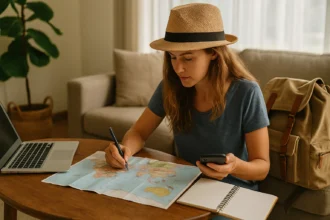
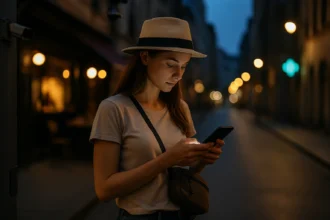
When I started traveling years ago, my trips were a mix of guidebooks, paper maps, and asking strangers for directions. Today, I rely on my phone for almost everything. While nothing replaces curiosity and spontaneity, the right apps make travel smoother, safer, and more enjoyable.
In this post, I’ll share the best travel apps I use all the time. These are apps that have saved me money, helped me avoid stress, and even kept me safe. Some are well known, while others are hidden gems I discovered along the way.
Flight and Booking Apps
Skyscanner
Skyscanner is my go-to app for finding cheap flights. I love its “Everywhere” search option, which shows you the best deals from your city to destinations around the world. On one occasion, I used it to book a last-minute flight from Paris to Lisbon for under €40.
Booking.com
I’ve tried many accommodation apps, but I keep coming back to Booking.com. What I like most is the flexibility—many hotels allow free cancellation. This gave me peace of mind when I wasn’t sure how long I’d stay in a city.
Also, you might want to read my post on 48 Hours in Paris: How I Spent a Perfect Weekend, where I used Booking to find a hotel near the train station.
Omio
For trains and buses in Europe, Omio is essential. During my trip across Europe by train, it helped me compare routes and prices in one place.
If you’re planning something similar, check out my post How I Traveled Europe by Train Without Breaking the Bank.
Navigation Apps
Google Maps
It may sound obvious, but Google Maps is still one of the most powerful travel tools. I always download maps offline before arriving in a new city. This saved me countless times when I didn’t have internet access, especially in remote areas of the Swiss Alps.
Speaking of hiking, you can read about my experience Hiking in the Swiss Alps: What I Learned on the Trails.
Maps.me
Sometimes Google Maps misses smaller hiking trails or backroads. Maps.me often has better coverage for off-the-beaten-path routes. It also works completely offline, which is a lifesaver in rural areas.
Language and Communication Apps
Google Translate
I used to carry phrasebooks, but now Google Translate does the work. The camera function is especially useful—you just point your phone at a menu, and it translates instantly.
When I traveled in Bangkok, this feature helped me understand food stalls and menus. You can see more about that adventure in Bangkok Food Tour: The Dishes I’ll Never Forget.
Duolingo
I don’t aim to become fluent before every trip, but learning a few words makes a big difference. Saying “hello,” “thank you,” or “please” in the local language goes a long way. Duolingo makes it fun and easy to practice daily.
Money and Budget Apps
Revolut
Managing money abroad used to stress me out. Revolut allows me to pay in local currency with low fees and track expenses instantly. It even lets me exchange money directly in the app at good rates.
XE Currency
Before apps, I was terrible at quick conversions. XE Currency helps me know exactly what I’m spending. This came in handy in Thailand, where prices are listed in baht and I didn’t want to overpay as a tourist.
Safety and Health Apps
SmartTraveler
This app from the U.S. State Department offers travel advisories, embassy contacts, and safety tips. Even if you’re not American, the alerts are helpful to understand what’s happening in the region.
For more advice, you can read my post Travel Safety Tips I Wish I Knew Earlier.
Sitata
Sitata gives real-time alerts about health risks, strikes, or protests in the area you’re visiting. It also helps you find nearby clinics.
Food and Local Experience Apps
Google Reviews
I’ve discovered amazing hidden restaurants by following Google Reviews. Instead of only sticking to what’s on blogs, I look at reviews from locals.
HappyCow
As someone who occasionally looks for vegetarian or vegan food, HappyCow is a lifesaver. It lists vegetarian-friendly restaurants in almost every major city.
During my Bangkok trip, it helped me find a small café serving vegetarian Thai curries—a welcome break after days of meat-heavy street food.
Transportation Apps
Uber / Grab / Bolt
Depending on the country, I always download at least one ride-hailing app. They are often safer and more reliable than hailing taxis on the street. In Bangkok, Grab saved me from being overcharged by tuk-tuk drivers.
Rome2Rio
If I’m unsure how to get from one city to another, Rome2Rio gives me every option—bus, train, ferry, plane—with estimated costs. It’s one of the best planning tools I’ve ever used.
Lesson Learned: Don’t Overload Your Phone
When I first started downloading apps, I filled my phone with dozens of them. In the end, I only used a handful. Now I keep my essentials folder to about 12 apps. Fewer apps mean less stress and more focus on enjoying the trip.
Useful Resources
Final Thoughts
Travel apps have become my modern travel companions. They don’t replace curiosity or human interaction, but they make travel easier and more accessible.
From finding cheap flights to navigating trails without internet, these apps helped me avoid stress and focus on the best parts of travel and discovering new places, meeting people, and collecting memories.
So, the next time you pack your bags, make sure your phone is ready too. The right apps might just make your journey smoother, cheaper, and more memorable.